The heart is our greatest organ of perception. It is one of our main tools for connecting with plants and other beings. It is a crucial part of both our physical and spiritual wellbeing.
The heart is an organ that is often thrown out of balance in this day and age, largely from being overlooked. From stress and poor diet, to holding tension or anxiety in the heart, to grief. Whether it shows up as issues with blood pressure, cholesterol or irregularities in the heartbeat — sometimes issues with the heart appear in more subtle and energetic ways, like sadness, or tension, or fear and constriction.
Regardless of how it shows up for each of us, the heart is both an organ and an energetic center that needs tending to.
Two of my favourite plants that are great remedies of the heart are Hawthorn and Motherwort.
Hawthorn
Crataegus monogyna
History
Hawthorn is one of my favourite plants, as well as a sacred ancestral remedy for me. It has long been revered as one of the most sacred and powerful plants in the British Isles. In Ireland they would even build roads that curved around hawthorn trees, so as to not cut them down.
Family
Hawthorn is in the rose family (Rosaceae) — hence the red berries and the thorns. This relation shows in that they are both antioxidant rich plants, sour and cooling to heat in the cardiovascular system, and tonifying to the blood vessels. Although they are in the same family, they do have different healing properties that are unique to one another.
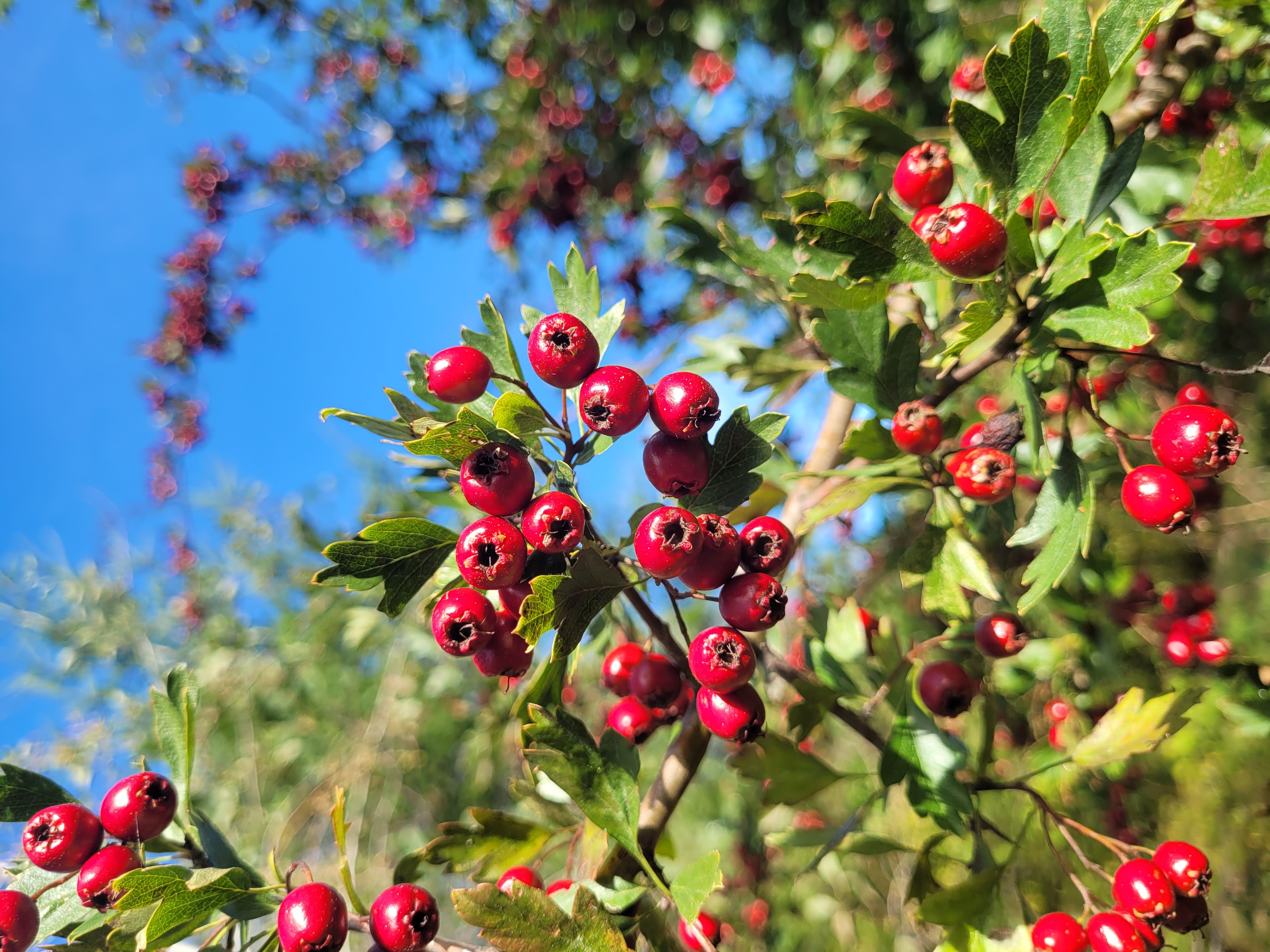
Being a tree, it holds a very strong and grounded energy, holding space to deepen in our own roots. The flowers bloom in springtime around Beltane, or the beginning of May, and grow in white or pink bunches — which then in the fall turn to clusters of bright red berries. It has thorns along the smaller branches that are almost needle-like. They can puncture deep.
Preparation and Dosage
The primary parts of hawthorn that are used are the berries and the flowers. They are used in slightly different ways but are both specific to the heart and cardiovascular system. It is often taken as a tincture or a decoction — a decoction being tea made by boiling the herbs, rather than pouring hot water over them, which would be an infusion.
It is best taken daily over a long period of time, as it is a nourishing remedy and regular intake is needed to see the benefits of its medicinal properties. I would suggest taking a dropperful, or an 8 oz cup of tea, two to three times a day. It is one of the select herbs that can be taken daily for years with no negative side effects, and will overall just improve your health.
Medicinal Uses
Hawthorn is best taken long term and has little to no negative side effects or interactions with other medicines or drugs. It works on the heart by strengthening the pumping mechanism, as well as making the capillaries more elastic so they can exchange nutrients within the blood. It has also been shown to lower unhealthy cholesterol and reduce high blood pressure. However, people with severe low blood pressure should consult a physician before using hawthorn, due to its blood pressure lowering capacity.
Hawthorn has been known to reduce the risk of heart attack by opening the coronary arteries and increasing blood flow to the heart. Not only does it improve the physical function of the heart and circulatory system, but it also reduces the anxiety, irritability and nervousness that sometimes accompanies heart conditions.
Hawthorn is a slightly cooling remedy, like other berries, and will help cool excessive heat in the tissues and relieve inflammation in this way. It is overall tonifying and strengthening, providing solid support for any heart issue.
Energetic Uses
On the energetic side, hawthorn is a really amazing plant ally for opening the heart in a safe and protected way. Like many heart remedies it has thorns — hence the name. These remedies assist in creating a loving energetic boundary that is strong in its vulnerability and protected against ill forces.
Hawthorn is also known as a powerful ally in the healing of grief. As it nourishes the heart it also holds space for the grief to flow in and out with ease, bringing about a sense of acceptance and a feeling of being held. I find specifically black hawthorn, a variety native to the Pacific Northwest of the United States, to be especially helpful in the grieving process.
In my meditations with hawthorn I have seen her as a loving grandmother who is not afraid to speak her mind and protect her loved ones. An ancient tree who for ages has been honoured as a home to the faeries and spirit beings. For this reason it has been revered so deeply, having been said that anyone who harmed a hawthorn tree would be cursed.
The deep red of the berries also shows a level of depth — not only in the way it supports our feeling capacity, but also in the strong level of protection this plant carries. The berries are cooling and slightly tart, which expresses an inward drawing energy.
Hawthorn is like the center of our heart which we hold the closest and wish to protect. The sacred inner heart.
Hawthorn is a suitable ally for anyone wishing to deepen their feeling capacity and connect deeper with their innermost feelings. It is also an excellent ally for those who have been wounded by past traumas and wish to open their hearts in a safe and protected way.
Motherwort
Leonurus cardiaca
Motherwort is a wonderful remedy for the heart — its name alone says something about its loving presence. Traditionally the name comes from its affinity to the female reproductive system and its calming effect on the nervousness that can accompany hormonal fluctuations. Although it has a strong affinity to the female reproductive system, it also has a great effect on the heart. Its Latin name, Leonurus cardiaca, directly shows its use for the heart; it is known as the lion hearted herb because of this name.
Family and Taste Profile
Motherwort is a plant in the mint family (Lamiaceae), native to Europe. Its primary taste is bitter — it is extremely bitter. Bitter generally has an action on the digestive system and the liver and gallbladder, making the body secrete bile; but in motherwort’s case it also has an effect on the sympathetic nervous system and the vagus nerve.
Bitter is a generally cooling taste, bringing tone to the tissues and having a drying and grounding effect. This is helpful in the heart as well, when there is excessive heat, hyperactivity or anxiety. Excessive heat can be damaging to the cardiovascular system, so cooling remedies can be good allies in this way. Considering that bitter is a cooling and downward bearing action, motherwort is also known to drain excessive heat from the upper part of the body and calm strong emotional mood swings.
Preparation and Dosage
Motherwort can be prepared as a tea or a tincture. People generally prefer a tincture of the fresh herb, as it is an extremely bitter remedy and not the most delicious tea. Take 1–3 drops three times a day, up to a dropperful; or drink the tea made from the fresh or dry plant up to three times a day. The plant is harvested in the flowering stage and both leaves and flowers are used.
Caution. Women should take caution in using motherwort in large doses or with regularity, as it can shift your moon cycle — it is a strong emmenagogue, a plant that stimulates menstruation. It is not safe to take during pregnancy. For heart conditions, please consult your doctor before use.
Medicinal Uses
Motherwort is known as a cardiac nervine — a remedy for the nervous system in the heart. It specifically reduces nervous tension in the heart, allowing one to feel more balanced and calm. It is known to lower blood pressure and provide relief from palpitations, irregular heartbeat and tachycardia.
Additionally it is an excellent remedy for disturbed sleep and nervous restlessness. It helps us slow down, take a minute to ground, and not jump ahead to expressing things that are not fully thought out. Motherwort is unique as a nervine in that it acts on the gut, the nervous system and the heart — bringing together instinct, mind and heart into a cohesive being. It is especially useful for people who feel stress in their heart through palpitations, high blood pressure and rapid heartbeat.
Energetic Uses
On an energetic level motherwort carries a strong and grounded presence. She connects the womb with the heart, creating a level of balanced stability that helps one feel clear and confident in oneself.
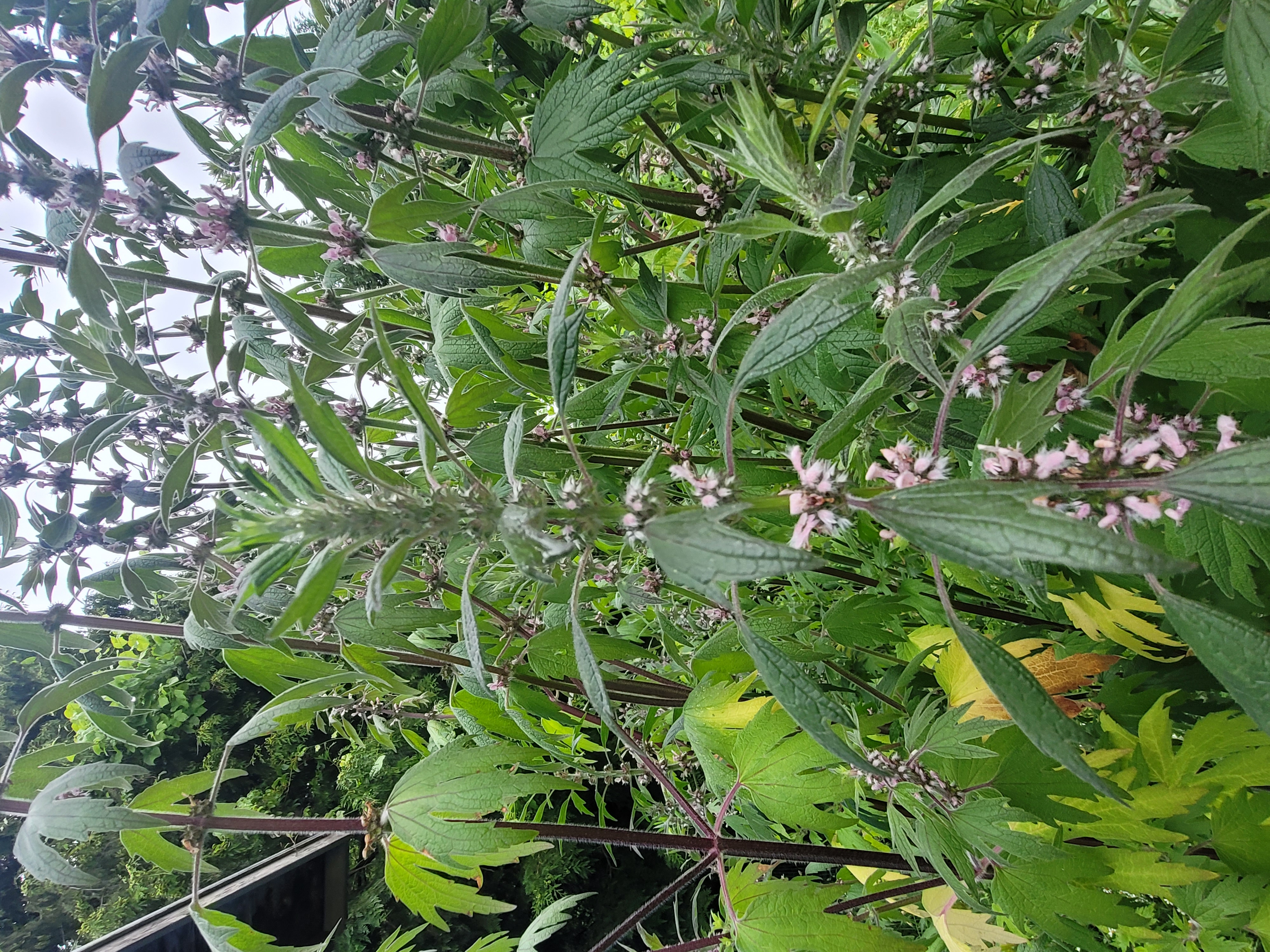
There is a form of understanding plants called the doctrine of signatures, where the physical form of a plant depicts the part of the body that it is useful for. An example is how walnuts resemble the brain. In motherwort’s case, it has evenly spaced flowers and leaves up along the stalk — thus resembling the regularity of a heartbeat and the pulse.
The flowers are evenly spaced up the stalk with prickly casings that the flowers protrude from. To me this shows consistency and stability, as in one’s heartbeat, and the prickles show a level of protection. Like a protective mother with the flower as her baby, she holds and protects her life force.
I find that most heart remedies have some form of prickle to them, and to me this signifies a level of confidence and protection for what we hold dearest to us. As our hearts are gentle, open and loving, they must also be safe to bloom.
Motherwort has extremely soft leaves that are almost fuzzy, like the hair on a baby’s skin. To me this demonstrates a level of tenderness — the tenderness of a mother, but it also reminds us to be tender with ourselves. To be graceful and forgiving, to see that when we do fall out of balance we can still hold a compassionate and consistent place to come back to.
The stems are purple and square, the flowers a light purpley pink with vibrant green leaves, and motherwort can grow to be over six feet tall. She holds a level of confidence and dignity, softness and protection, and teaches us how to connect the various parts of ourselves and ground in the wisdom of balance.
Heart Wisdom
There has been a lot of research done that shows that the heart is one of our greatest organs of perception.
One of my favourite books showing this is The Secret Teachings of Plants by Stephen Harrod Buhner. He speaks about how, at its most basic function, the heart is a pump — yet there is so much more.
It is an electromagnetic generator, producing a wide range of electromagnetic frequencies; an endocrine gland, making and releasing numerous hormones; and a part of the central nervous system. It is, in fact, a brain in its own right.
Stephen Harrod Buhner, The Secret Teachings of Plants, p. 72
The heart is so much more than just the organ that pumps our blood. It is an energy center, an organ of perception, the holder of our feelings and so much more. The way we see and feel our heart deeply impacts the way we interact with the world.
In my own practices I have found that when I interact with heart medicines I feel an overall sense of calm, connectedness and longevity. When we learn to listen not with our mind but with our heart, we will be initiated into the secrets of nature, and allowed access into the healing that it has to offer on all levels.
It is so important to care for our hearts — not only physically with our diet and daily activities, but also emotionally and energetically, by taking the time to slow down, tune in, and listen. The plants know the way, and so can we. Follow your heart, and good things will come.
Heart medicines can be a great ally to incorporate into your life whether you have physical heart conditions or not. They can be a generally supportive and easing ally that not only helps us to heal, but also prevents stress on the heart as well. They can help us physically, emotionally and spiritually. Personally I take heart medicines every day as a preventative measure — to strengthen my heart and keep me connected to my deeper knowing.
Working with these remedies not only fortifies our cardiovascular and nervous systems, but also supports us in staying connected to our feeling center and regulating our nervous systems. Heart medicines are for everyone. So reach out for them when you need a little extra love.
Disclaimer. For those with serious heart conditions or on heart medication, please consult your physician before incorporating herbs into your routine. Additionally, use caution when taking herbs if you are pregnant.
Bibliography
- Stephen Harrod Buhner. The Secret Teachings of Plants: The Intelligence of the Heart in the Direct Perception of Nature. Rochester, Vt., Bear & Co, 2004.
- Wood, Matthew. The Earthwise Herbal: A Complete Guide to Old World Medicinal Plants. Berkeley, Calif., North Atlantic Books, 2008.